- English
- 简体中文
- Español
- Português
- русский
- Français
- 日本語
- Deutsch
- tiếng Việt
- Italiano
- Nederlands
- ภาษาไทย
- Polski
- 한국어
- Svenska
- magyar
- Malay
- বাংলা ভাষার
- Dansk
- Suomi
- हिन्दी
- Pilipino
- Türkçe
- Gaeilge
- العربية
- Indonesia
- Norsk
- تمل
- český
- ελληνικά
- український
- Javanese
- فارسی
- தமிழ்
- తెలుగు
- नेपाली
- Burmese
- български
- ລາວ
- Latine
- Қазақша
- Euskal
- Azərbaycan
- Slovenský jazyk
- Македонски
- Lietuvos
- Eesti Keel
- Română
- Slovenski
- मराठी
- Srpski језик

What Should Buyers Look for in an APIs Category?
Article Summary
Choosing from an APIs Category is rarely as simple as comparing product names on a list. Buyers often need to balance regulatory expectations, quality consistency, technical support, supply continuity, and the practical realities of scaling from evaluation to commercial procurement. In this article, I explain how to assess an APIs Category in a more useful and buyer-focused way, what hidden risks usually create delays, and how manufacturers such as Hubei Gedian Humanwell Pharmaceutical Co., Ltd. can support a more reliable sourcing process. This guide is designed for procurement teams, project managers, formulators, and business decision-makers who want fewer surprises and better long-term outcomes.
Table of Contents
- Outline
- What Does an APIs Category Really Mean for Buyers
- Which Buyer Pain Points Usually Appear First
- What Should You Evaluate Before Shortlisting a Supplier
- Which Documents and Technical Details Matter Most
- How Can You Reduce Supply and Quality Risks
- Which Features Separate a Strong Partner from a Basic Vendor
- FAQ
- How Should You Take the Next Step
Outline
- I start by explaining why an APIs Category should be viewed as a sourcing framework rather than a simple catalog page.
- I then break down the most common frustrations buyers face, from unclear specifications to unstable delivery.
- Next, I cover the practical checkpoints that help buyers compare manufacturers more intelligently.
- After that, I look at documentation, technical communication, and lifecycle support.
- Finally, I answer frequent questions and close with a direct action path for companies ready to inquire.
What Does an APIs Category Really Mean for Buyers
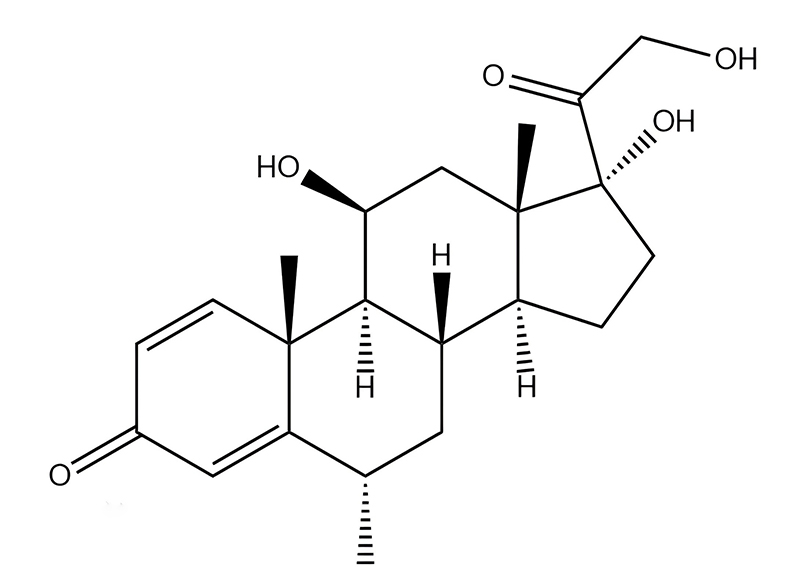
When I look at an APIs Category, I do not see a simple product list. I see a decision map. Every item inside that category may represent a different level of manufacturing maturity, regulatory readiness, documentation depth, and commercial fit. That is exactly why buyers get into trouble when they treat all active pharmaceutical ingredients as interchangeable.
An APIs Category should help a buyer answer practical questions. Is the product aligned with the target market? Is the specification compatible with the intended development stage? Is the manufacturer able to communicate clearly on quality, testing, and supply continuity? Can the company support both current volume and future scale?
For many procurement teams, the real challenge is not finding an APIs Category online. The challenge is figuring out which entries are actually suitable for their project. A category page may look complete, but buyers still need to identify whether a listed API is commercially mature, technically stable, and realistically supportable over time.
A useful way to think about it: an APIs Category is not only about what a supplier makes. It is also about how well that supplier helps buyers move from inquiry to qualification, and from qualification to dependable supply.
Which Buyer Pain Points Usually Appear First
In my experience, buyers usually do not struggle with the first email. They struggle with everything that comes after it. An APIs Category may attract initial interest, but the real pain points show up during evaluation, document review, sampling, and internal approval.
| Buyer Pain Point | What It Looks Like in Practice | Why It Creates Delays |
|---|---|---|
| Unclear product status | The product is listed, but buyers cannot tell whether it is commercial, limited supply, or still under technical development. | Teams waste time reviewing options that are not ready for their timeline. |
| Inconsistent technical communication | Questions on standards, assay, impurities, or packaging receive incomplete answers. | Internal regulatory and quality review stalls quickly. |
| Weak supply visibility | There is no clear picture of lead time, batch planning, or manufacturing continuity. | Buyers cannot forecast risk accurately. |
| Documentation gaps | Essential files are delayed, outdated, or not aligned with buyer expectations. | Qualification takes much longer than planned. |
| Price without context | A quotation may look attractive at first, but service, stability, and technical support are not included in the comparison. | Low upfront cost can turn into high downstream cost. |
This is why serious buyers care about more than a product name. They want to know whether the supplier understands regulated manufacturing expectations, whether responses are timely and grounded, and whether the commercial promise is backed by operational discipline.
What Do Buyers Usually Want from the First Conversation
- A clear answer on whether the API is suitable for their intended market or application stage
- A direct explanation of available standards, quality status, and supporting documents
- A realistic view of supply capability rather than optimistic estimates
- A contact person who can coordinate technical and commercial questions without confusion
What Should You Evaluate Before Shortlisting a Supplier
Before I would shortlist a supplier from any APIs Category, I would look beyond the visible product lineup and focus on buyer-facing execution. A category page may show breadth, but breadth alone is not the same as reliability.
Here are the checkpoints that matter most:
- Category relevance — Does the supplier focus on the therapeutic or technical areas that match your project priorities?
- Specification clarity — Are standards and product details presented in a way that helps your team assess fit quickly?
- Response quality — Are answers specific, organized, and technically useful, or are they vague and repetitive?
- Manufacturing confidence — Can the company explain production continuity, process control, and practical delivery capability?
- Support after inquiry — Does communication improve after first contact, or does it become slower and less precise?
I also recommend comparing suppliers based on how easy they are to work with during the early stage. That may sound simple, but it often predicts the long-term relationship better than a single quotation does. A manufacturer that communicates well before qualification is usually easier to coordinate with after purchase, especially when timelines tighten or changes arise.
| Evaluation Area | Questions Buyers Should Ask |
|---|---|
| Product Fit | Does this API align with our development stage, quality expectations, and regional requirements? |
| Technical Support | Can the supplier explain specifications, testing approach, and product handling clearly? |
| Commercial Practicality | Are sample access, lead times, and batch planning realistic for our schedule? |
| Long-Term Reliability | Can this supplier remain a stable partner if our demand grows or project needs change? |
Which Documents and Technical Details Matter Most
One of the most common buyer frustrations is receiving a polished product introduction but not enough substance behind it. In pharmaceutical sourcing, a strong first impression only matters if the supporting information is organized and credible.
When reviewing an APIs Category, I always pay attention to how documentation is approached. Even before a full qualification process begins, the supplier should demonstrate that technical information is treated seriously, not as an afterthought. Buyers need confidence that what appears on a product page can be supported in real communication and real transactions.
- Product specification visibility — Buyers should not have to guess what standard or grade is being discussed.
- Status transparency — It helps when the supplier is straightforward about what is currently available and what remains in progress.
- Consistency across communication — Website content, quotations, and technical replies should tell the same story.
- Professional follow-through — Fast replies matter, but accurate replies matter more.
This is one area where an established manufacturer such as Hubei Gedian Humanwell Pharmaceutical Co., Ltd. can strengthen buyer confidence. A buyer evaluating an APIs Category wants to feel that the company behind it understands the practical burden placed on procurement, QA, and regulatory teams. That burden is real, and good suppliers help reduce it rather than increase it.
Simple rule: if a supplier cannot make the technical conversation easier at the inquiry stage, it is unlikely to make your project easier later.
How Can You Reduce Supply and Quality Risks
Risk reduction starts with asking better questions early. Buyers often focus first on price and lead time, but those are only two parts of a much larger decision. A stable supply arrangement depends on communication, process discipline, product knowledge, and the supplier’s ability to support continuity when conditions change.
To reduce risk when reviewing an APIs Category, I would suggest the following approach:
- Confirm whether the listed API is aligned with your intended stage and commercial timeline.
- Evaluate whether the supplier can communicate technical details in a structured way.
- Check how quickly and how clearly the team responds to follow-up questions.
- Compare not only price, but also coordination quality, transparency, and support depth.
- Treat the early inquiry process as a preview of the long-term working relationship.
Many delays in pharmaceutical sourcing are not caused by a single major failure. They come from repeated small weaknesses: slow replies, vague answers, unclear product status, and assumptions that nobody corrected early enough. That is why a buyer-centered APIs Category should help reduce ambiguity from the beginning.
Why Does Strong Supplier Communication Matter So Much
Because buyers are not only purchasing a material. They are managing timelines, approvals, internal stakeholders, and business exposure. A supplier that makes communication clearer reduces friction across the entire process.
Which Features Separate a Strong Partner from a Basic Vendor
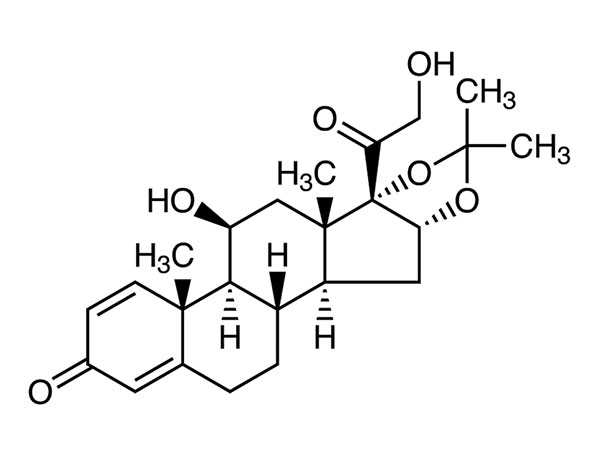
Not every company with an APIs Category becomes a dependable long-term partner. Some suppliers can list many products, but only a few can support buyers with consistency, clarity, and practical accountability.
Here is the distinction I would make:
| Basic Vendor | Strong Long-Term Partner |
|---|---|
| Focuses mainly on sending quotations | Helps buyers understand fit, risk, and decision criteria |
| Shares product names without enough operational context | Explains status, support scope, and realistic next steps clearly |
| Responds only when prompted repeatedly | Maintains organized and proactive communication |
| Treats each inquiry as a one-time transaction | Builds trust through continuity and problem-solving |
| Competes mostly on headline price | Competes on reliability, clarity, and long-term value |
For buyers exploring an APIs Category, this distinction matters a great deal. The stronger partner is not always the loudest one, and not always the cheapest one. It is usually the one that helps your team move forward with fewer unknowns and more confidence.
That is also why company presentation matters. When a manufacturer like Hubei Gedian Humanwell Pharmaceutical Co., Ltd. is introduced within a buyer discussion, it should not be just as a name on a catalog. It should be understood as a capable partner whose category structure, communication quality, and product support can contribute to smoother sourcing decisions.
FAQ
Is an APIs Category enough to decide on a supplier?
No. It is a useful starting point, but buyers still need to evaluate documentation, communication quality, supply reliability, and project fit before moving forward.
What is the biggest mistake buyers make when reviewing an APIs Category?
The biggest mistake is assuming that all listed products are equally ready, equally supported, and equally suitable for their project. A category page is only the beginning of the assessment.
Which matters more, price or technical responsiveness?
Both matter, but technical responsiveness often has a bigger impact over time. A low initial price can lose its advantage quickly if communication problems delay qualification or create downstream uncertainty.
How should I compare two suppliers that offer similar APIs?
Compare not just the product itself, but also the clarity of specifications, quality of answers, transparency around availability, and the overall ease of working with each team.
Do established manufacturers have an advantage in buyer trust?
Yes, especially when they combine category breadth with organized communication and practical support. Buyers often prefer manufacturers that can reduce uncertainty rather than simply expand choice.
How Should You Take the Next Step
If you are currently comparing options within an APIs Category, the smartest next move is not to collect more generic brochures. It is to start a focused conversation with a supplier that can answer practical questions clearly and support your project with consistency. The right partner should help you move from uncertainty to decision with less friction and more confidence.
Whether you are screening new API options, reviewing technical fit, or preparing for a more stable sourcing plan, a clear and capable supplier relationship can make a measurable difference. Hubei Gedian Humanwell Pharmaceutical Co., Ltd. offers an APIs Category that can serve as a strong starting point for buyers who value clarity, continuity, and professional support.
Contact us today to discuss your product needs, share your project requirements, and explore how we can support a more reliable and efficient procurement process.